2025 End-of-Year Update

As we close out 2025, we at Reporting on Addiction want to share some exciting updates, accomplishments, and give thanks to all of you who support our work. We couldn't do it without you.
New York microgrant recipient
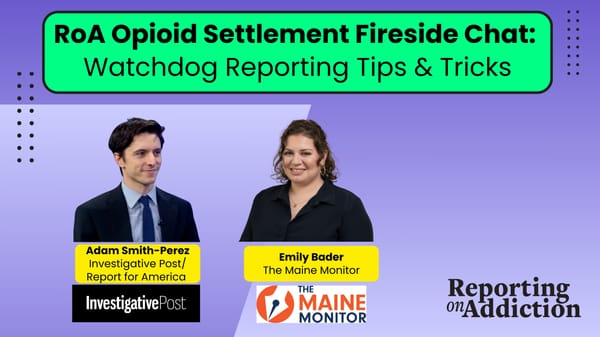
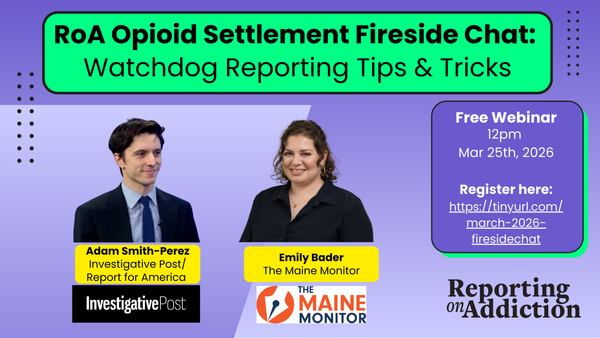
Adam Smith-Perez is an investigative journalist and audio producer. He is currently the urban affairs and criminal justice reporter at Investigative Post, a nonprofit watchdog newsroom in Buffalo, NY. He is also a Report for America corps member. Adam has covered overdose prevention centers in New York City for The Nation, Hepatitis C and the overdose crisis for VICE News, and most recently, the millions of opioid settlement funds unspent by the City of Buffalo for Investigative Post. He has also fact-checked features, investigations, and essays for The Nation, Mother Jones and The Food & Environment Reporting Network, and produces Jeet Heer's podcast, The Time of Monsters, for The Nation.

Adam has a Master of Science degree from Columbia University’s Graduate School of Journalism, where he received Honors distinction in reporting. He is also a member of the Association of Health Care Journalists and the National Association for Hispanic Journalists.
For Journalists
Opioid Settlement Reporting
In October, we conducted our first Opioid Settlement Training in Augusta, Maine! It was wonderful to hear from and work with the reporters tackling these important stories in the Pine Tree State.
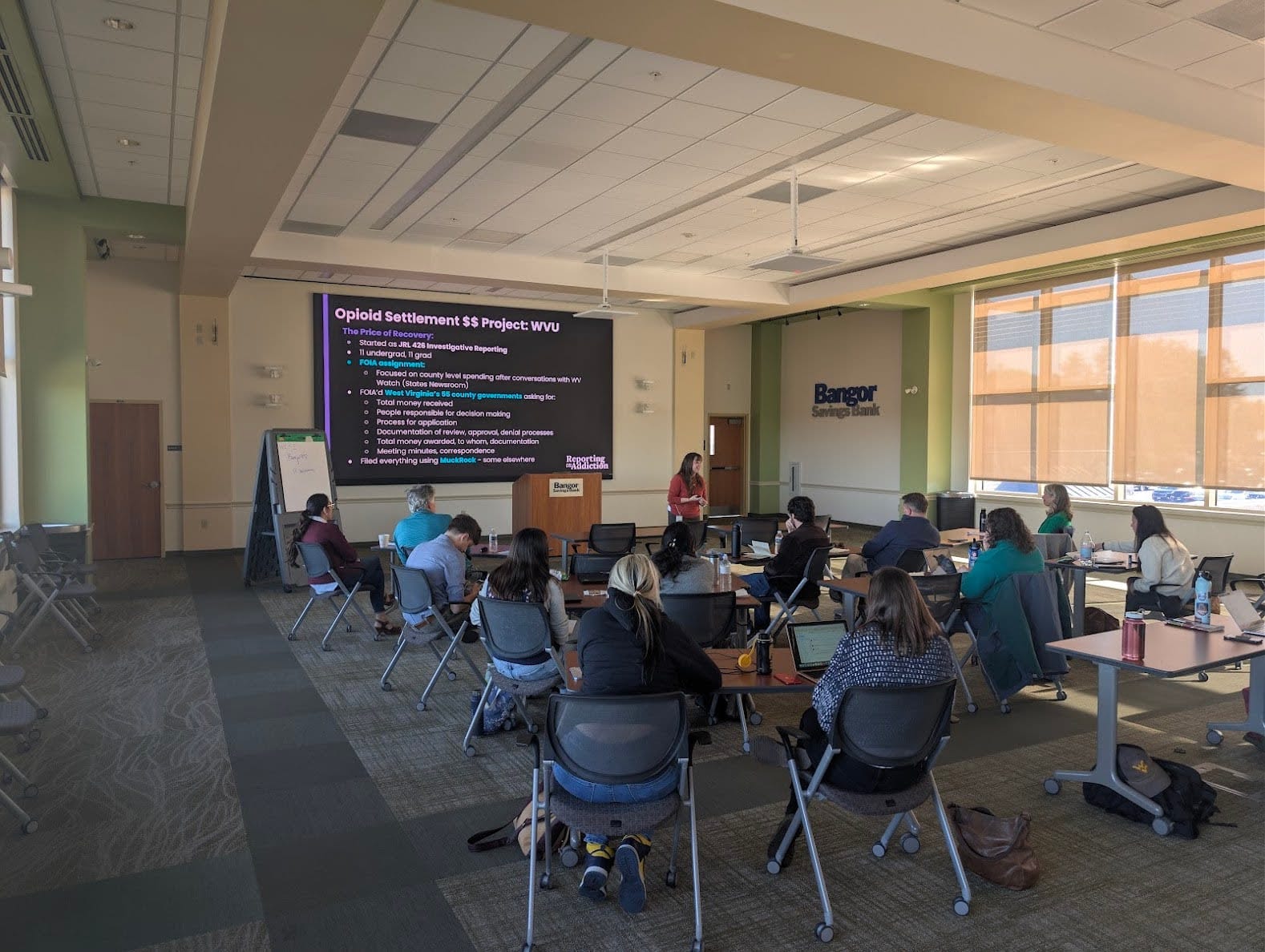
This event was part of our OSF funded opioid settlement grant focused on helping newsrooms cover these stories. We’ll be headed to Kentucky, New Jersey, then New York in 2026 to round out the first year of the grant.
If you’re in one of these states, fill out a registration form for our free trainings below, and we’ll see you in the New Year:
- Louisville, Kentucky — 2026 Kentucky Press Association Winter Convention, Friday, Jan. 26
- New Brunswick, New Jersey — Rutgers University, Friday, Feb. 6
- Ithaca, New York — Park Center for Media Ethics, Friday, Feb. 27
Need Help Reporting on Opioid Settlement Funds in Your State?
This new guide – created by MuckRock based on our collaboration reporting on opioid settlement funds in West Virginia – breaks down exactly how to use FOIA to uncover where settlement dollars are going in your state. It includes sample requests, practical reporting strategies, and smart tips that save you time and get you better records, faster.
If you’re covering public health, government accountability, or local budgets, this is the kind of resource that immediately levels up your reporting. A must-read for your next investigation.
Read the reporting recipe from MuckRock here.
ICYMI: Watch our latest fireside chat on reporting on opioid settlement funds
Quarterly, we host a conversation with a journalist, editor or expert who can help improve your coverage of these critical funds, and if you missed our September conversation with Mental Health Reporter Allen Siegler and Managing Editor Kate Royals of Mississippi Today, you’ll want to check out the recording here!
In Mississippi, where opioid settlement dollars are quietly reshaping public health policy, journalists Siegler and Royals of Mississippi Today have been leading the charge in uncovering where that money is going — and where it’s not. But telling these stories takes more than just good reporting. It requires newsroom support, editorial collaboration and strategies to make complex narratives resonate with local audiences.
In this 30-minute fireside chat, Siegler and Royals will share their process for reporting on opioid settlement spending in a state with some of the most pressing health problems in the country. They’ll discuss how they worked together - as reporter and editor - to frame the stories, the challenges of simplifying complex public health and financial information, and how to pitch accountability stories that get greenlit.
Find even more on our new website
If you hadn’t noticed… our website has a whole new look! This is thanks to the hard work of team member Kristen Uppercue!
The new look includes all of our previous materials, but has a new and improved Resource Library where you can filter through all of our resources by topic - including Opioid Settlement Funds.
A New Resource
We are excited to share our latest set of resources on contingency management (CM) to help improve your reporting year-round.
Contingency management (CM) is a behavioral intervention for substance use disorders (SUD) that offers an alternative means to achieve pleasure or relief, but only when a person engages in behaviors other than using a drug they are trying to stop or reduce using. CM is flexible and effective. It helps reduce issues across different addictions. Recently, some states have moved to use Medicaid to cover CM programs, but with federal cuts coming, access to this treatment could become more pressing for you to cover in your community.
 Rachel Molenda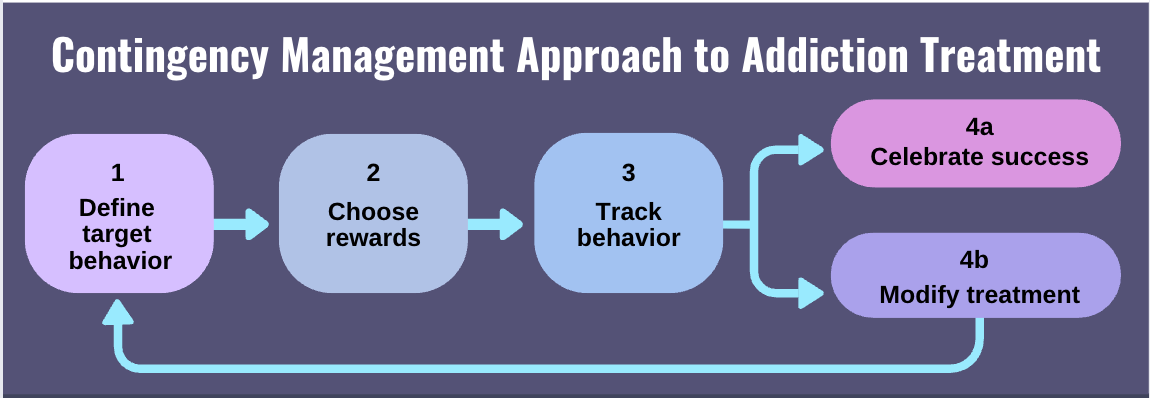
For Educators
Summer 2025 Journalism Educator Cohort
This summer, a group of five journalism educators from across the country and Canada completed our free train-the-trainer webinars, gaining valuable tools to improve addiction reporting in their classrooms. Over five virtual sessions, participants explored the latest in evidence-based addiction science and medicine, discussed addiction stigma, and learned how to identify problematic reporting.
The 25 educators who have participated over the past four years of this training are now equipped to guide the next generation of journalists in empathetic and accurate reporting on addiction. Whether they're dedicating entire courses or integrating new strategies into existing curricula, these educators left with adaptable teaching materials ready for use in the classroom.
Participants received:
- A deeper understanding of current addiction science and stigma
- Techniques for addressing stigma and misinformation in classroom discussions
- Ready-to-use teaching materials, including lectures and assignments
- Personalized assistance in adapting the materials to fit their courses
- A supportive community of educators and journalists teaching difficult topics
We look forward to the positive impact this training will have on future reporting and the ongoing efforts to destigmatize addiction. Stay tuned for updates on how to join our next cohort!
If you are looking for one-on-one support, whether you’re a journalist, educator or expert, contact us here.
We’ve had a busy and exciting year at Reporting on Addiction, and we’re grateful for your support along the way! As always, please get in touch with questions by email at contact@reportingonaddiction.org. Have a safe and happy holiday season. We’ll see you in 2026!